
Juodas šuo
Young Russia: The Genesis of Russian Radicalism in the 1860s
Young Russia: The Genesis of Russian Radicalism in the 1860s
Couldn't load pickup availability
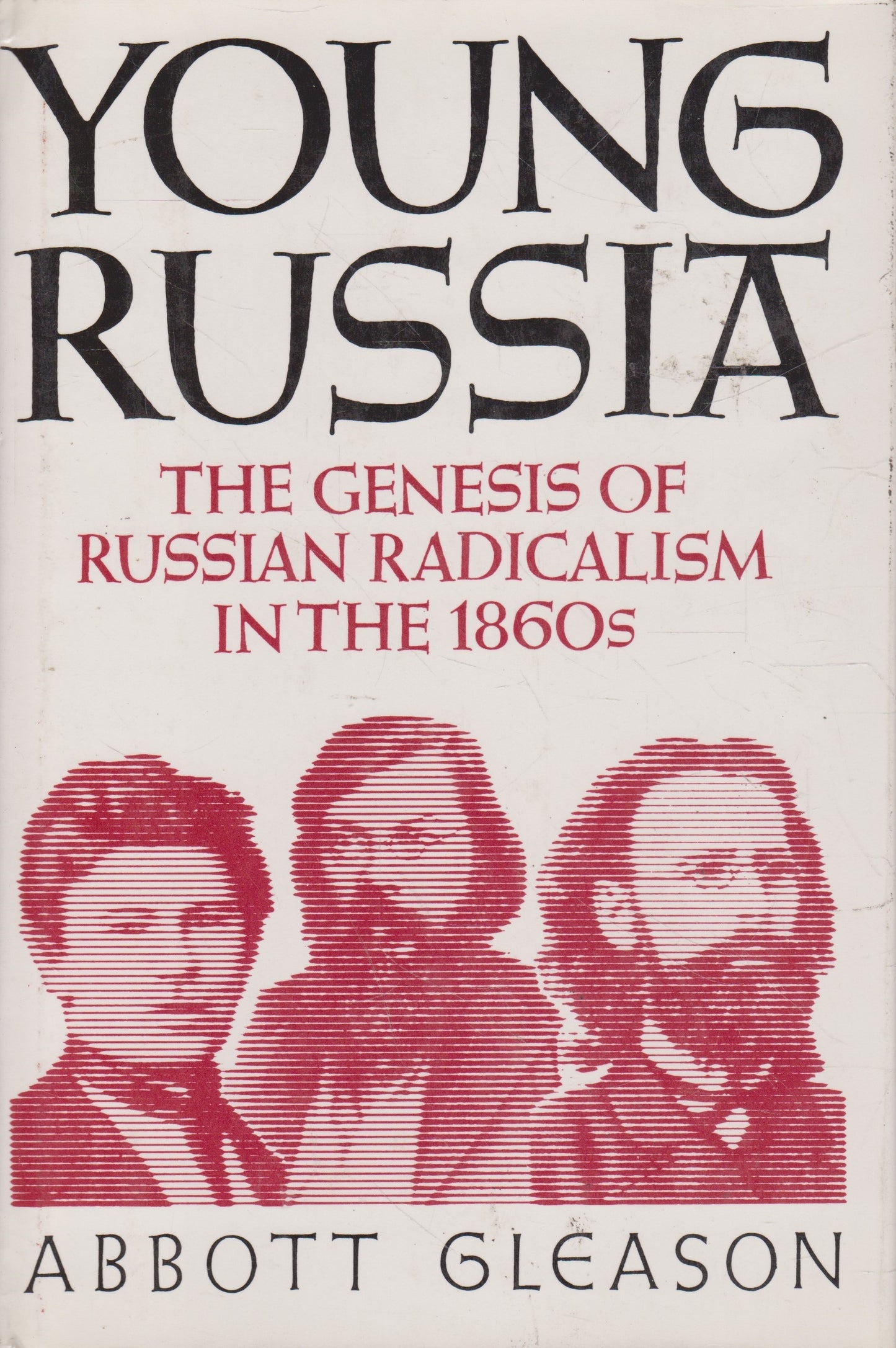
Abbott Gleason. New York: Viking Press, 1980. 451 p., hardcover
condition: very good, dustjacket has slight signs of use.
19th-century Russian radicals have long held interest for historians. Partly this is because of the Russian Revolution of 1917 & the search for its origins, but mostly it is because of the intellectual vigor of the radicals themselves. Gleason (History, Brown) focuses on the transition period between radicals whose commitment was to revolutionizing--or being revolutionized by--the Russian masses & the emergence of the individual revolutionary (in Russia, often with smoking bomb in hand). He clarifies the various labels involved--noting, for example, that the Slavophiles, with their almost mystical faith in the traditions of the people, & the Populists, with their faith in progress & desire to catch up to Europe, came to overlap in the intelligentsia's desire to liberate the peasants. The importance the Russians themselves placed on the distinctions between generations of radicals finds its place too, as he depicts the rise & decline of central figures like Herzen & Chernyshevsky as well as the shifting intellectual climates that shaped them. Other, more specifically literary figures--Pushkin, Leskov, Tolstoy, Turgenev--also pass thru the narrative. All of this has, of course, been gone over before--on a massive scale by Franco Venturi in Roots of Revolution.
This focused study is meant to be more intimate. He achieves that aim not only in the final chapter on Nechaev, the anarchist loner, but in a long portrait of the little-known Pavel Ivanovich Iakushkin, a populist archetype who "played no great role, influenced the course of events slightly, if at all, & left no important literary legacy." He follows the bohemian Iakushkin around as he wanders about from handout to handout spreading the gospel of peasant emancipation until his death in 1872. Readers of Venturi or Isaiah Berlin will be familiar with the story overall, but others will find this an accessible introduction.--Kirkus (edited)