
Juodas šuo
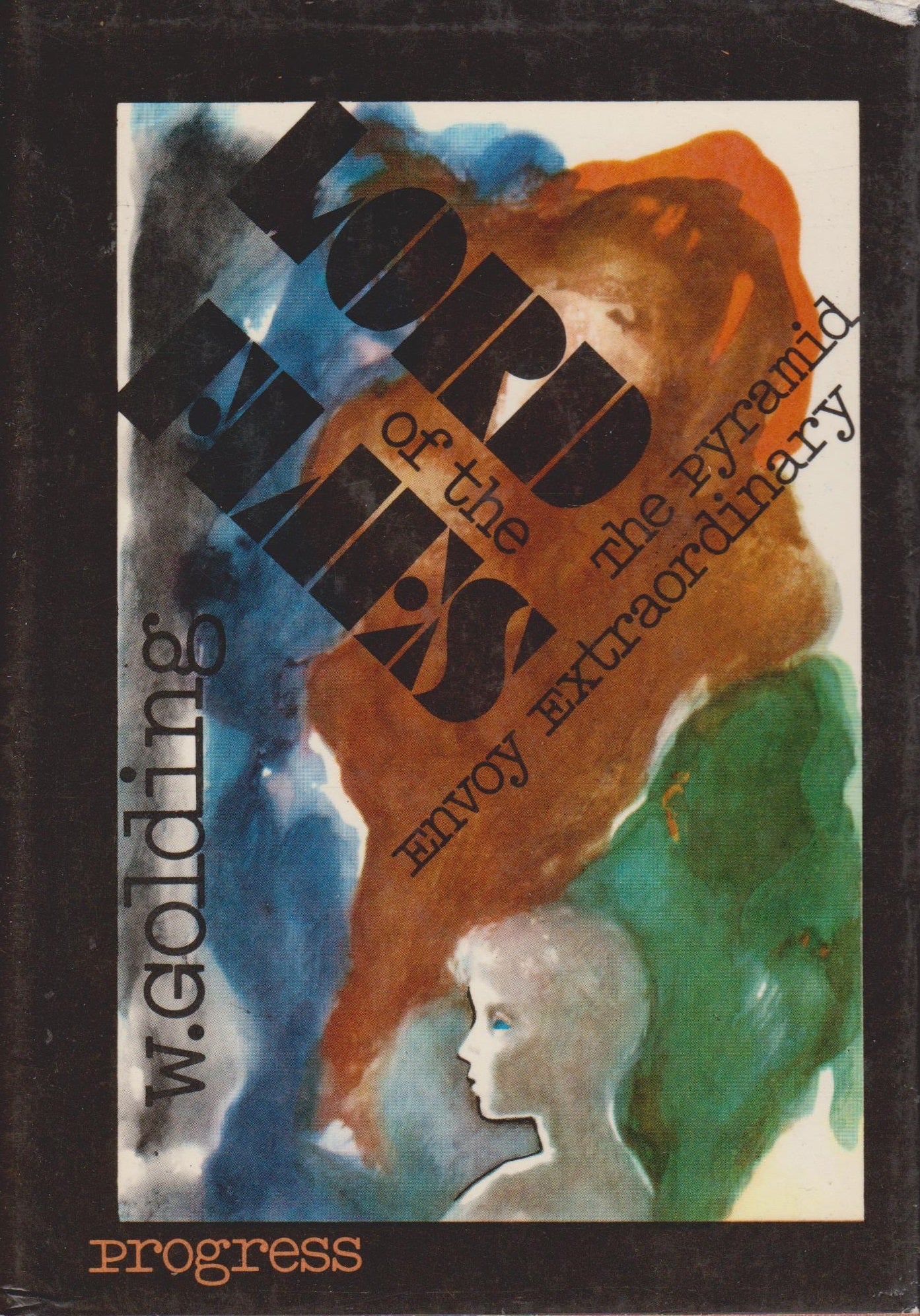
W. Golding - The Lord of the Flies, The Pyramid, Envoy Extraordinary
W. Golding - The Lord of the Flies, The Pyramid, Envoy Extraordinary
Couldn't load pickup availability
fiction / The Lord of the Flies / The Pyramid / Envoy Extraordinary / William Golding. Moscow : Progress Publishers, 1982. 494 p.
condition: good, the edges of the dustjacket are a bit dulled and torn in some places. the book block is slightly slanted.
The Lord of the Flies:
At the dawn of the next world war, a plane crashes on an uncharted island, stranding a group of schoolboys. At first, with no adult supervision, their freedom is something to celebrate; this far from civilization the boys can do anything they want. Anything. They attempt to forge their own society, failing, however, in the face of terror, sin and evil. And as order collapses, as strange howls echo in the night, as terror begins its reign, the hope of adventure seems as far from reality as the hope of being rescued. Labeled a parable, an allegory, a myth, a morality tale, a parody, a political treatise, even a vision of the apocalypse, Lord of the Flies is perhaps our most memorable novel about “the end of innocence, the darkness of man’s heart.”
The Pyramid:
Oliver is eighteen and wants to enjoy himself before going to university. But this is the 1920s and he lives in Stilbourne, a small English country town where everyone knows what everyone else is getting up to, and where love, lust and rebellion are closely followed by revenge and embarrassment.
Envoy Extraordinary:
Envoy Extraordinary is set in Ancient Rome, in and around the Emperor's court. The aged Emperor lives with his favourite grandson, the seventeen-year-old Mamillius. The true heir, Posthumus, is governor of a distant province, but is jealous of Mamillius. The normal Roman world is shattered by the arrival of the inventor, Phanocles. He brings many inventions that are far ahead of his time, including the pressure cooker, steam engines and explosives. However', the emperor realises that these inventions will destabilize the empire. At the end of the book, the emperor sends Phanocles away to be the ambassador to China. It can be concluded that this is why China, and not Rome, invented these wonderful things some time later.